
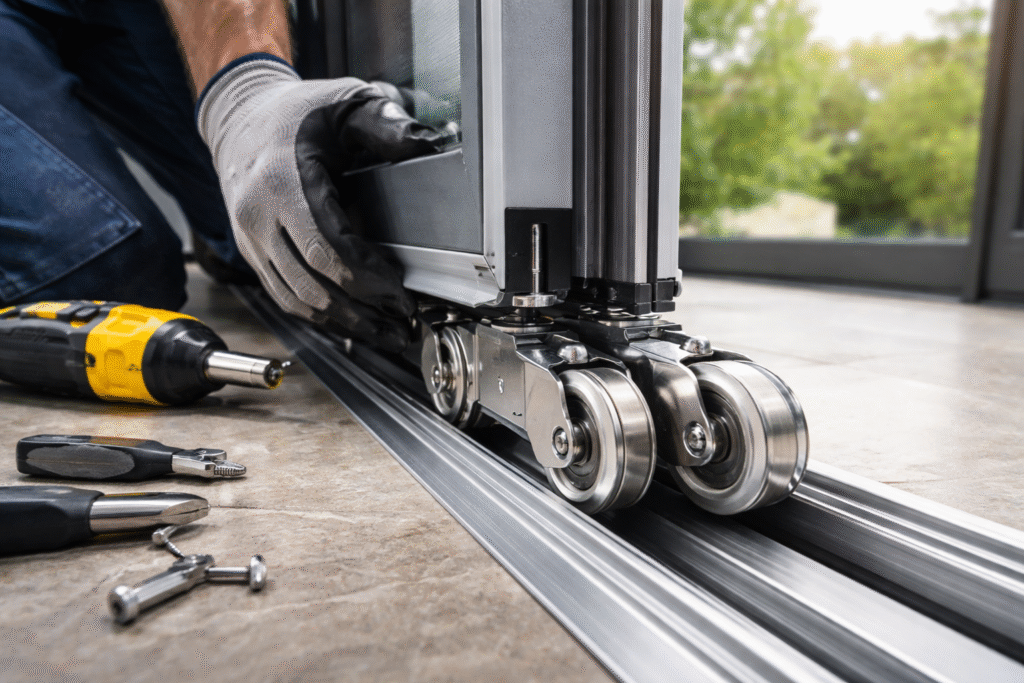
If your sliding door feels heavy, sticks, or makes grinding noises every time you open it, the issue almost always comes down to the rollers. When standard rollers fail, the only real long-term fix is upgrading to heavy duty sliding door bottom rollers.
This guide breaks everything down clearly, what they are, why they matter, how to choose the right ones, and when to replace them.
What Are Heavy Duty Sliding Door Bottom Rollers?
Sliding door heavy duty bottom rollers are reinforced wheel systems installed at the base of sliding glass doors. They carry the full weight of the door and allow it to move smoothly along the track.
Unlike standard rollers, these are built with stronger materials like stainless steel, precision ball bearings, and reinforced housings designed for heavy glass panels and constant use.
They are engineered to:
- Support significantly more weight
- Maintain proper alignment
- Resist corrosion in humid climates
- Reduce friction and wear
Why Roller Quality Matters More Than You Think
Most people assume the track or the glass is the issue. It’s not.
Rollers are responsible for the majority of sliding door problems.
Cheap rollers fail because:
- Bearings seize from dirt and moisture
- Wheels flatten under pressure
- Housing cracks over time
Once that happens, the door starts dragging, and then damages the track, making repairs more expensive.
Benefits of Heavy Duty Rollers
Smooth, Effortless Sliding
High-quality rollers reduce friction and allow the door to glide easily without force.
Handles Heavy Glass Doors
Heavy-duty rollers are made for:
- Impact doors
- Hurricane-rated glass
- Oversized patio doors
Standard rollers cannot handle this weight long-term.
Longer Lifespan
Heavy duty sliding door bottom rollers last significantly longer than standard rollers, especially in high-use homes.
Protects the Track
Bad rollers grind into the track and cause permanent damage.
Upgrading prevents:
- Track wear
- Frame damage
- Costly system repairs
Built for Florida Conditions
Humidity, salt air, and sand destroy low-quality rollers fast.
Heavy duty sliding door bottom rollers use:
- Stainless steel
- Sealed bearings
- Corrosion-resistant materials
Standard vs Heavy Duty Rollers
Feature | Standard Rollers | Heavy Duty Rollers |
Weight Capacity | Light | High |
Durability | Low | High |
Materials | Plastic/Nylon | Steel/Stainless |
Lifespan | Short | Long |
Performance | Inconsistent | Smooth & reliable |
Signs You Need Roller Replacement
If you notice any of these, your rollers are worn out:
- Door is hard to slide
- Grinding or scraping sounds
- Door feels uneven or drops
- Track damage or debris buildup
- Door gets stuck midway
Waiting will only increase repair costs.
Types of Heavy Duty Sliding Door Bottom Rollers
Stainless Steel Tandem Rollers
- Dual wheels for better weight distribution
- Ideal for heavy glass doors
- Best for outdoor use
Precision Ball Bearing Rollers
- Ultra-smooth operation
- Designed for frequent use
- Long-lasting performance
Nylon-Coated Heavy Duty Rollers
- Quieter movement
- Less wear on tracks
- Suitable for indoor or low-moisture areas
How to Choose the Right Rollers
Check Door Weight
Heavy doors require heavy duty sliding door bottom rollers, no exceptions.
Match the Track System
Not all rollers fit all doors. Size and shape must match.
Choose the Right Material
- Coastal areas → Stainless steel
- Interior use → Nylon or composite
Look for Sealed Bearings
Prevents dirt, sand, and moisture from damaging the rollers.
Consider Professional Installation
Improper installation leads to poor performance, even with high-quality rollers.
Cost of Heavy Duty Sliding Door Bottom Rollers
Typical pricing:
- Rollers: $50 – $200 per set
- Labor: $150 – $400
- Full service: $200 – $600+
While more expensive upfront, they reduce long-term repair costs.
Why DIY Often Fails
Replacing rollers is not simple.
It requires:
- Removing the full door
- Precise alignment
- Height and balance adjustments
- Proper track positioning
One mistake and the door will still not function correctly.
Why Professional Repair Matters
A proper service includes:
- Roller replacement
- Track cleaning and inspection
- Alignment adjustments
- Full performance testing
This ensures the door works like new, not temporarily fixed.
FAQs
How long do heavy duty sliding door bottom rollers last?
Typically 5–10+ years depending on usage and environment.
Are heavy duty rollers worth it?
Yes. They last longer, perform better, and prevent future damage.
Can I upgrade from standard rollers?
Yes, and it’s strongly recommended for heavier or frequently used doors.
Why is my door still hard to open after replacing rollers?
Possible issues include:
- Track damage
- Improper installation
- Misalignment
Do rollers impact energy efficiency?
Yes. Poor rollers cause misalignment, leading to air gaps and energy loss.
Final Thoughts
If your sliding door isn’t gliding smoothly, the problem won’t fix itself.
Upgrading to heavy duty sliding door bottom rollers restores performance, prevents damage, and extends the life of your door system.
If your sliding door is sticking, dragging, or not working properly, it’s time to fix it the right way.
Naomi Sliding Doors specializes in:
- Heavy duty roller replacement
- Sliding door repairs
- Track restoration
- Full system tune-ups
Contact Naomi Sliding Doors today to get your door sliding smoothly again.
